
Keywords
Paideia
Polis
Ethos
Self-sufficiency
Categories
How to Cite
Abstract
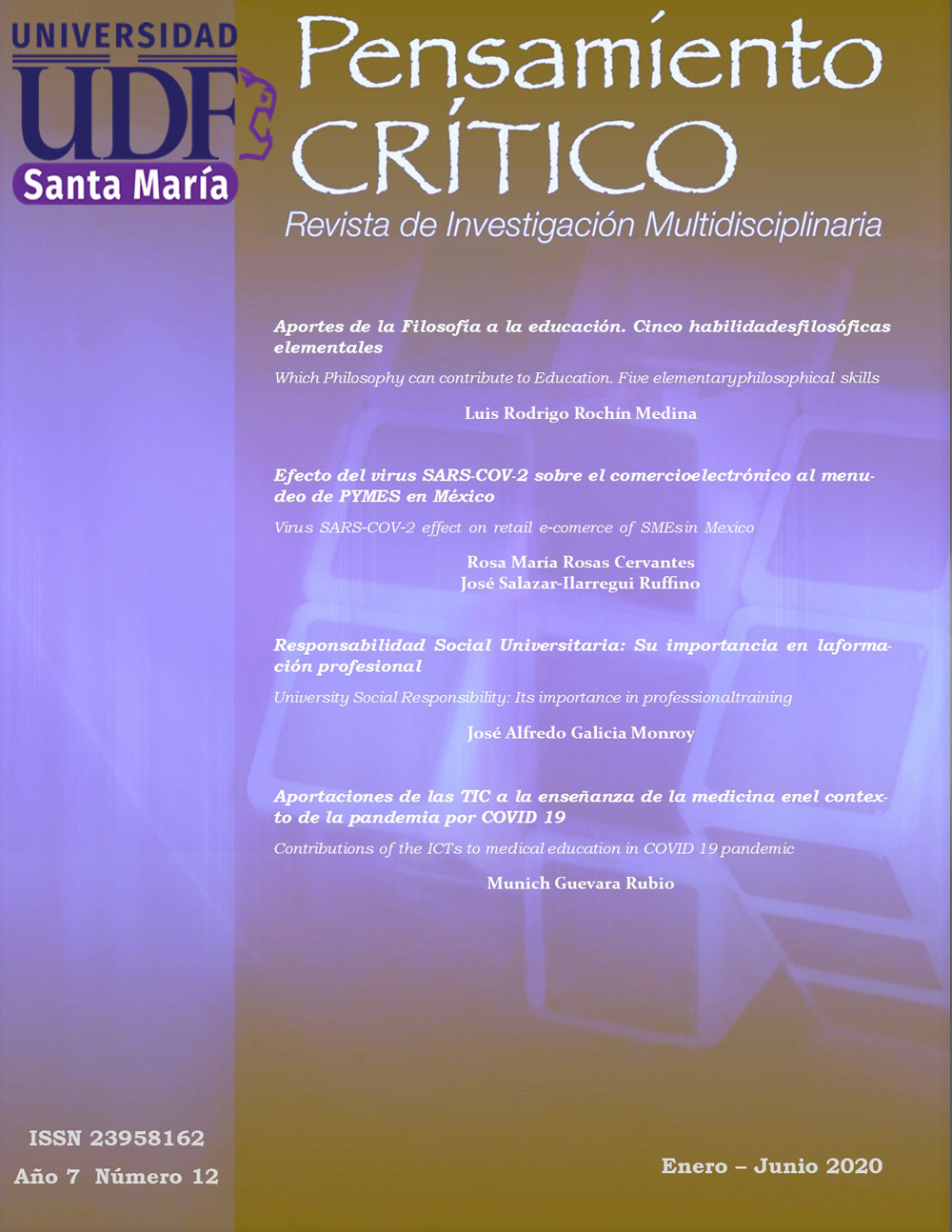
In this article of theoretical analysis I present an exhibition of what philosophy can contribute to education, understanding philosophy as a set of reflections typical of a self-reflective activity and that, framed inteaching-learning postulates, can enhance the educational exercise. In the first place, I argue from a visionof the history of ideas: 1)that the concern for education must be a social circumstance and humanistic, 2)that all education depend son philosophicalfoundationsthat seek to focus on avisionoftheself-sufficiency of the student. Second, 1) I analyze examples of philosophers who recover explanations of howto do education with the philosophical tradition, 2) I show that the efforts of Philosophy today provide a persuasive justification that ducation can be improved, so the yares how nas necessary in education asetoffive basic conditions of philosophizing.
References
Arendt, H. (1963/2017). Eichmann en Jerusalén, México: Penguin Random House.
Aristóteles (trad. 1993). Física. Buenos Aires: Biblos.
Aristóteles (trad. 1994). Metafisica. Buenos Aires: Biblos.
Aristóteles (trad. 1998). Tratado acerca del Alma. Madrid: Gredos
Descartes, R. (1637/2004). Discurso del método. Madrid: Alianza.
Descartes, R. (1641/1991). Meditaciones Metafísicas. México: Espasa-Calpe.
Ficino, M. (2009). Las cartas de Marsilio Ficino. Madrid: Mándala.
Galilei, G. (1612/2006). Carta a cristina de Lorena y otros textos sobre ciencia y religión. España: Alianza.
Kant, I. (1803/1983). Pedagogía. España: Akal.
Patiño Palafox, L. A. (2016). Divulgar la filosofía, ¿Necesidad o capricho? En: G. Vargas & L. A. Patiño (Coords.). La difusión de la filosofía ¿Es necesaria?, (pp. 153- 173). México: Torres Aso- ciados.
Pico della Mirandola, G. (1486/ 2020). Discurso sobre la dignidad del hombre. Madrid: Arpa Editores.
Platón (trad. 1998). República. Madrid: Gredos.Platón (trad. 2017). Timeo. México: Catedra.
Villalobos, E. M. (2018). Didáctica Integrativa y el proceso de aprendizaje. México: Trillas.
Zingano, M. (2008). Paideia, virtud intelectual y virtud moral en la antigüedad. En G. Hoyos (Ed.). Filosofía de la educación, (pp. 55-75). España: Trotta.
Zuluaga, O. L. (1999). Pedagogía e historia. Histo- ricidad de la pedagogía. La enseñanza, un obje- to de saber. Colombia: Anthopos.

This work is licensed under a Creative Commons Attribution-NonCommercial-NoDerivatives 4.0 International License.
Copyright (c) 2025 Pensamiento Crítico. Revista de Investigación Multidisciplinaria